THE ART OF THE AMBUSH
How to Turn What Hunts You Into What Completes You
There is a kind of courage that the world misunderstands almost entirely.
We are taught that bravery is the absence of fear — that the courageous woman is the one who does not tremble, does not hesitate, does not feel the cold weight of the thing she is walking toward. We celebrate the warrior who charges without flinching, who never shows the enemy what it costs her to stand her ground.
But there is a deeper courage than that. A more sophisticated, more devastating, more ultimately triumphant kind of courage.
It is the courage of the ambush.
It is the courage of the woman who looks at the thing that has been hunting her — that old wound, that recurring fear, that pattern of defeat that keeps showing up in the wilderness of her life, wearing different faces but carrying the same hunger — and instead of running from it one more time, instead of one more deferral, one more detour, one more sleepless night spent listening to its footsteps getting closer —
She sets a trap.
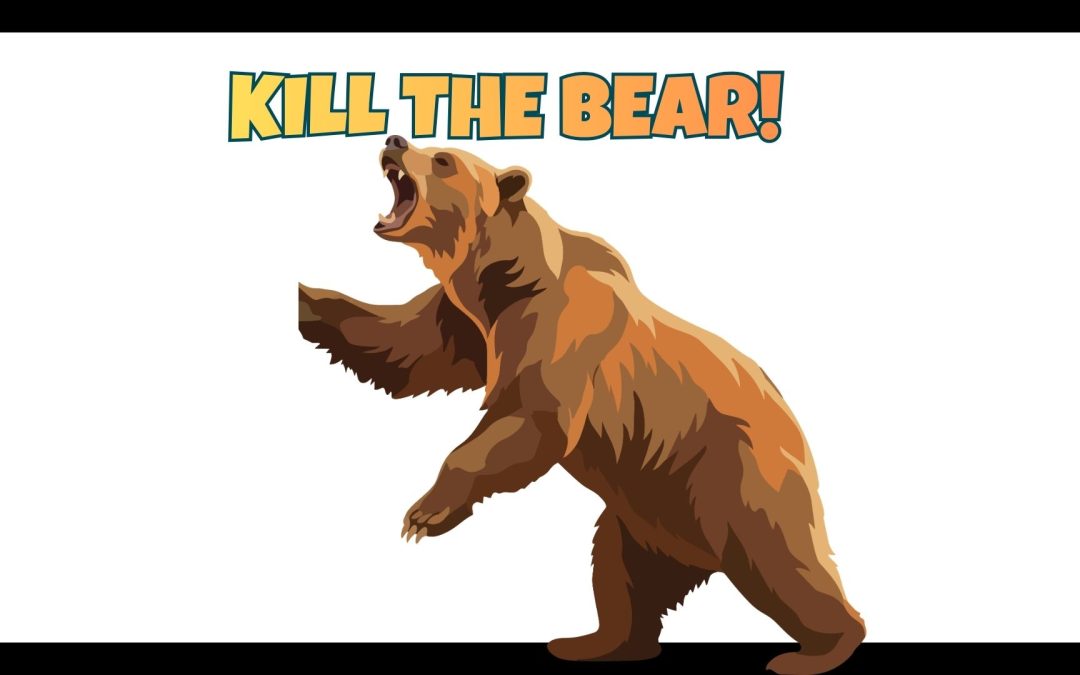
In the 1997 film The Edge, Anthony Hopkins plays Charles — a billionaire stranded in the Alaskan wilderness after a plane crash, being tracked by a Kodiak bear that has already killed and eaten one of his companions. The bear is enormous. Relentless. It has been following them for days through the unforgiving forest, and it is not going to stop. It does not tire. It does not lose interest. It does not forget.
Most people, watching that film, feel the primal terror of being hunted — of knowing that something vastly more powerful than you knows exactly where you are and is moving steadily, patiently, inevitably toward you.
Charles feels it too. But then he says the sentence that changes everything:
“We must kill the bear.”
And not merely kill it — but kill it strategically. Because they cannot outfight a Kodiak bear with their bare hands. They are not strong enough, not fast enough, not armed enough for a head-on battle. So they do something that requires more than physical courage. They use their minds. They craft weapons from the wilderness itself. And then — in the most audacious act of the entire film — they stop running and become the bait.
They lure the bear to them.
They let it believe the hunt is over. That they are cornered. That the meal it has been pursuing through miles of frozen forest is finally, helplessly, within reach. The bear charges toward them with the full, terrible confidence of a predator that has never lost.
And it runs directly into the trap.
The beast that had been devouring their hope, their strength, their companion — the thing that had been hunting them through the wilderness of their worst days — was ended not by luck, not by rescue, not by the bear simply losing interest and wandering away.
It was ended by strategy. By preparation. By the willingness to stop fleeing and start thinking. By the courage to make themselves the bait, trusting completely in the trap they had built and the weapons they were holding.
The bear never saw it coming.
Now let me ask you something.
What has been hunting you?
Not the abstract fears — I mean the specific one. The one that has been following you through the years with patient, relentless hunger. The one you have been outrunning through busyness, through distraction, through the elaborate architecture of avoidance you have constructed around the most tender, most frightened parts of yourself.
The obstacle you did not face five years ago did not disappear. It went back into the wilderness and it grew. It fed on every year of your avoidance, every detour you made to keep from confronting it, every night you sensed it circling in the dark and pulled the covers tighter rather than getting up and facing it. It is larger now than it was then. More practiced. More confident in its ability to make you run.
And here is the terrible arithmetic of avoidance: the longer you wait, the stronger it gets, and the more your running has taught it that you are prey.
But you are not prey.
You are a woman with a mind sharp enough to craft a weapon out of whatever the wilderness has given you — and the wilderness has given you everything you need. Your pain has given you empathy. Your mistakes have given you wisdom. Your suffering has given you the precise understanding of where the bear is vulnerable, because you have been studying it, up close and personal, for years. Your most difficult seasons were not wasted time.
They were your weapons training.
So here is what I want to propose to you — not as a metaphor, but as a literal strategy for the battle you have been avoiding:
Stop running. Build your spear. And set the trap.
Identify the thing that has been hunting you and study it with the cold, clear eyes of a strategist rather than the hot, blurred vision of someone in flight. What does it need in order to charge? What conditions make it most aggressive, most confident, most certain of its victory? And how can you create exactly those conditions — deliberately, on your own terms, in a location of your choosing — so that when it comes thundering toward you with all its terrible momentum, it finds not the cornered, exhausted prey it was expecting, but a woman standing firm, weapons raised, ready to end this once and for all?
This is not recklessness. This is not the bravado of someone who does not understand the danger. This is the highest form of courage available to a human being — the willingness to let the thing that terrifies you believe it has won, right up until the moment it discovers that it has walked into exactly the ending you prepared for it.
The bear is coming regardless.
It was always coming. That is the nature of the things we do not kill when we have the chance — they do not forgive the mercy we mistook for wisdom, and they do not stop.
So do not waste another season in retreat. Do not spend another year feeding the thing that wants to consume you with the nourishment of your own avoidance.
Turn around.
Hold your spear steady.
Let it come.
A woman who kills what would kill her — who faces it, outthinks it, lures it into the ambush of her own making, and ends it on her own terms —
that woman never dies.
She only becomes more dangerous.
And that, beloved, is exactly what you were always meant to be. 👑🔥🌹
Mommy Supermodel is a community for women in disruption — women who are rising, rebuilding, and reclaiming the fullness of who they are. You are not alone. You never were.